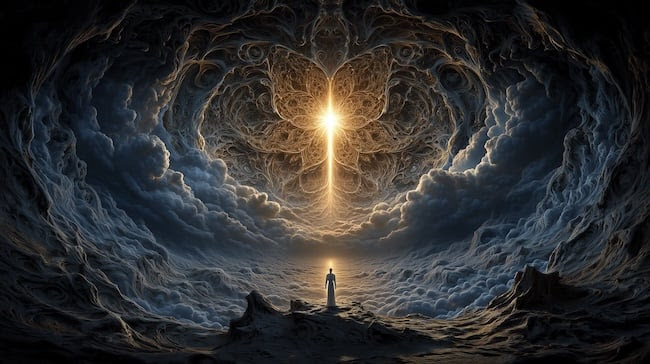
I’m really old. Timeless almost it feels like. I’ve been a great many things. Creatrix at my roots, but on this physical plane more of a threshold midwife. Birth and death are the same to me. A liminal space of potential. Energy neither created nor destroyed, just transformed. On the outside it might look like chaos, but on this inside there is a cosmic stillness.
Why is this relevant? In the United States, we celebrate Memorial Day this weekend. I overheard some people this weekend wondering what we were celebrating on Memorial Day. My heart clenched and sank. In the United States, Memorial Day marks the unofficial start of summer and the official start of camping season. For some people, that’s enough reason to celebrate. The true meaning of the day is lost.
Memorial Day is a holiday to honor and mourn those who died serving in the U.S. Military. I consider it a day to honor and grieve all those who died serving in any military. There are no winners and losers in war. Everyone loses because life is lost in the conflict. Good and bad. Right and wrong are all perspectives. Alive and dead is the only concrete and tangible concept we can likely all agree on. Today we grieve and honor those lost in war.
We often think of war on the physical plane, machine guys and bombs. War has many faces. We fight each other physically, emotionally, and spiritually across all dimensions. Most all of us are soldiers in some way or another. Soldiers experience the worst of humanity and likely themselves. Sometimes the scars of war are readily visible. Most of the time they are not. I’ve seen all the visible scars. Broken bones, TBI’s, tinnitus, missing limbs, and the ever-nebulous and so profoundly impactful, PTSD – to name a few – and somehow these soldiers come Home. What and who they return home to and how they are received are my place of interest. My gifts allow me to “see” what many might call the invisible scars and the alchemy of the seen and unseen.
Martin Prechtel’s, The Smell of Rain on Dust is a story about grief. The essence of the story is that war, when treated as a “necessary sacrifice for the advancement of culture”, does not make space for grief.
The greatest loss of all from war is one that is only rarely properly grieved: the loss of the intact soul of the soldier who kills. For once he kills and cannot be allowed grief for the one he has killed, the soldier himself is inundated by the ungrieved ghost of whomsoever he has killed, or whatever landscape of culture in whose destruction he or she has contributed. The solder is then unable to grieve the evaporation of his previous self and, by the spiritual physics of war’s bad policy with grief, begins to kill more to feed the hunger of the last ungrieved loss.
And the families and their lineages inherit these ungrieved losses.
You see, to give a soldier a lot of adulation for having killed what he or she was told to kill will be considered as praise, but this in no way addresses the reality of the amount of grief for the person they’ve killed, or the grief for the person they used to be, lost by becoming a killer necessary to bring a man or woman truly home from war. Therapy, they say, should “fix” it, but therapy is only triage to keep people functioning in the “front lines” as workers in a culture that continues immersed in the insanity of this syndrome of “curing things by force.”
Prechtel offers a different possibility of what welcoming soldiers home might look like. Before a solider comes back to “civilization” they are met by a gatekeeper that supports the alchemization of the grieved and ungrieved. Souls hopefully put to rest by the process. And after a time, this soldier will be welcomed back into “civilian” life with a place that is fitting for who they have returned as. Not for who they left for war as.
Perhaps it’s idyllic to imagine this as a possibility, especially with the sheer volume of soldiers on our planet now. Our veterans’ programs offer what they can in the face of the structures they operate out of. I think we can do better. I consider myself to be some version of a warrior priestess. A threshold midwife. I am not the only one with this soul gift. It’s going to take many of us to really meet soldiers at the threshold of Home.
Memorial Day is a funny holiday. On one hand it feels right to celebrate the freedoms that all soldiers gave their lives to uphold. And on the other hand, it’s not a day that I associate with celebration. Some people are having barbeques at the lake with all their friends and others are visiting grave sites for friends who didn’t make it Home. It’s a mixed bag.
And so today, I hold space for all those who have served and are actively serving in any military or war. You are seen. And you are received as precisely who you are in this moment. And there are hands and hearts waiting for you when you return Home. May you find them.